The half of hockey that happens off the ice
What dryland actually means, and what the evidence supports about why it matters — hedged to the grade that evidence carries, which is not how most people sell it.
The half of hockey that happens off the ice
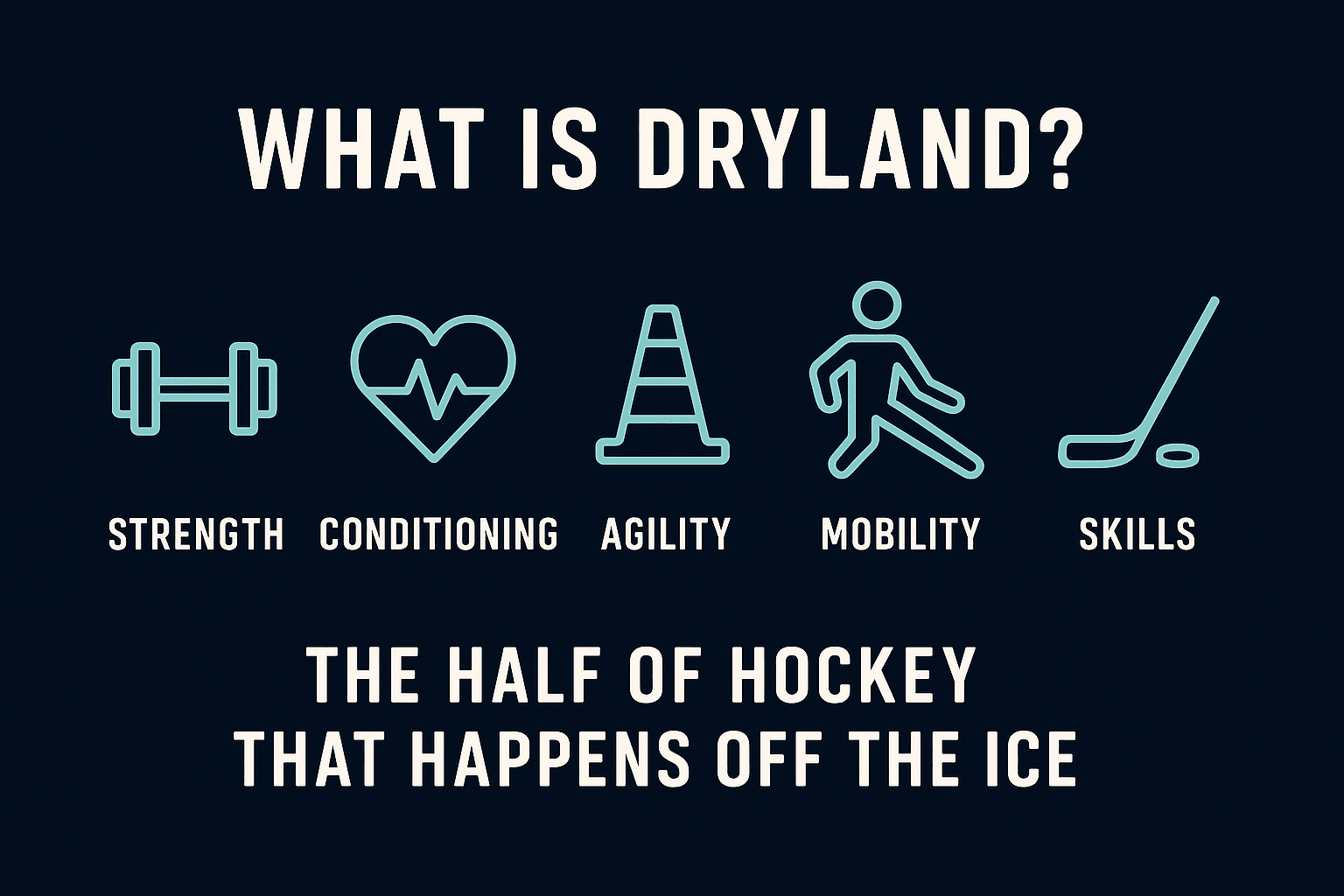
Dryland is everything a player does for hockey when they are not on it: getting stronger, building the engine, learning to move and change direction, staying mobile, and putting in the stick reps that never fit into a practice slot.
It is not extra. Ice time is the scarcest, most expensive thing a youth club buys, and it is where a team plays. The athlete underneath the player gets built somewhere else — usually a garage, a driveway or a living-room floor, in twenty-minute pieces.
What the evidence actually supports
We keep a graded reference for this rather than repeating what everybody says. Four things it supports, stated at the strength the evidence actually carries:
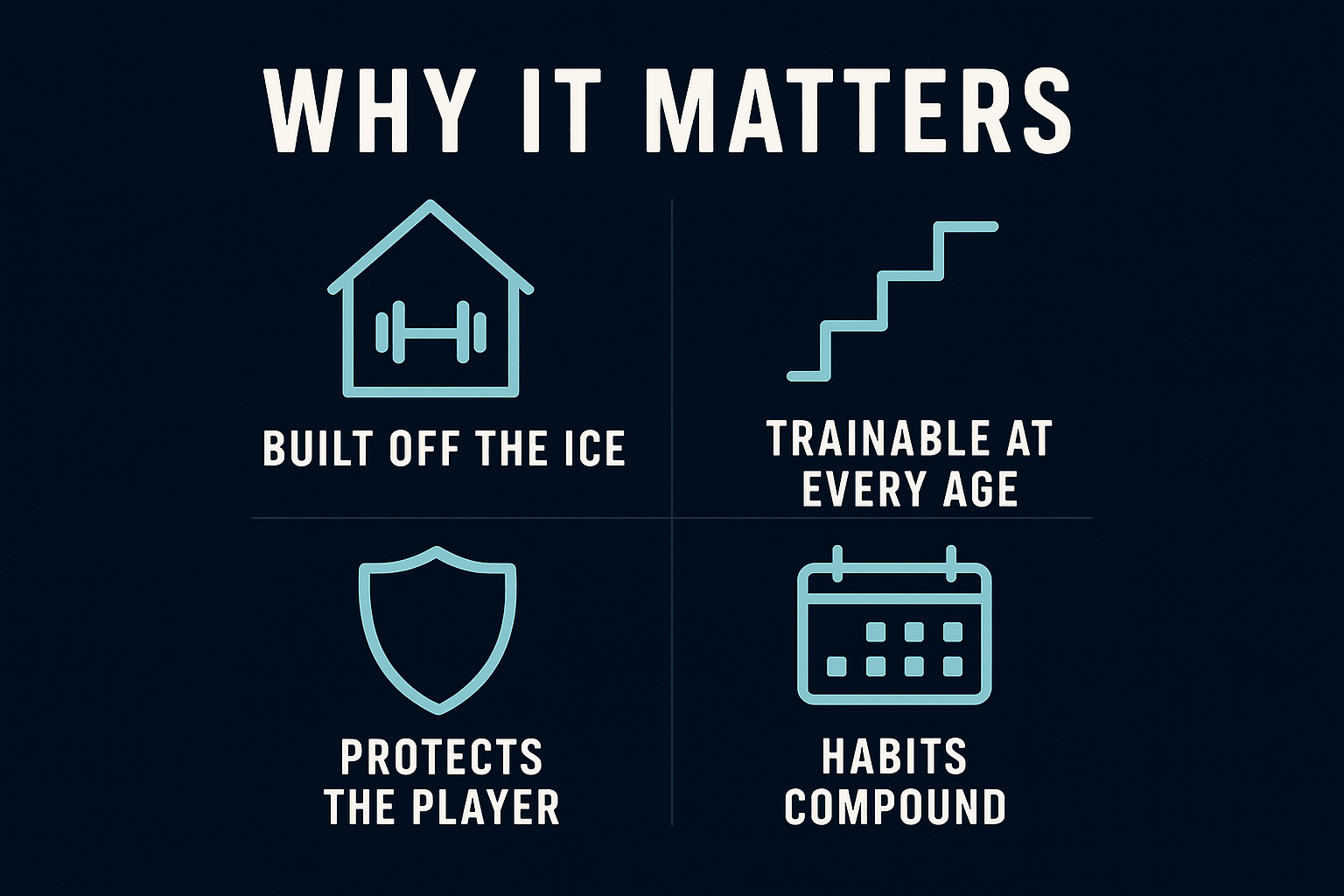
- Strength and motor skill are trainable at every age. The NSCA's position statement puts them as the primary focus from early childhood — and a full-text meta-analysis of youth athletes found strength gains were larger in children than in adolescents. Younger is not too young.
- There is no window you can miss. The old "critical windows" model has no empirical support, and we will not tell a parent their kid missed one. Early work is worth doing on its own merits, not out of fear.
- It protects the player. Conditioning that reduces injury risk is one of the NSCA's ten pillars. Neuromuscular warm-ups cut injury rates by roughly 40% across sports — the hockey-specific trial has not reported yet, so we quote it as what it is.
- The growth spurt can take capacity backwards. One longitudinal study of top-level youth players found core endurance and shuttle distance declined between 14 and 15 as mass outgrew capacity. That is an abstract we could not read in full, so treat it as a caution rather than a finding — but it is the caution that argues hardest for training through those years.
One thing we deliberately don't do: single-sport, year-round load for young kids. The evidence associates early specialization with more injuries and worse outcomes, so nothing in the app pushes it below U14.
Want to try it with your own team?
The quickest way to judge it is to run one week with a handful of players. Get in touch and we'll set your team up — roster, your programs, your weekly plan.