What keeps a 12-year-old training in February

The boards are built so the hardest-working kid wins, not the most athletic one. Here is the whole motivation engine, and the design decisions behind it.

What the player opens
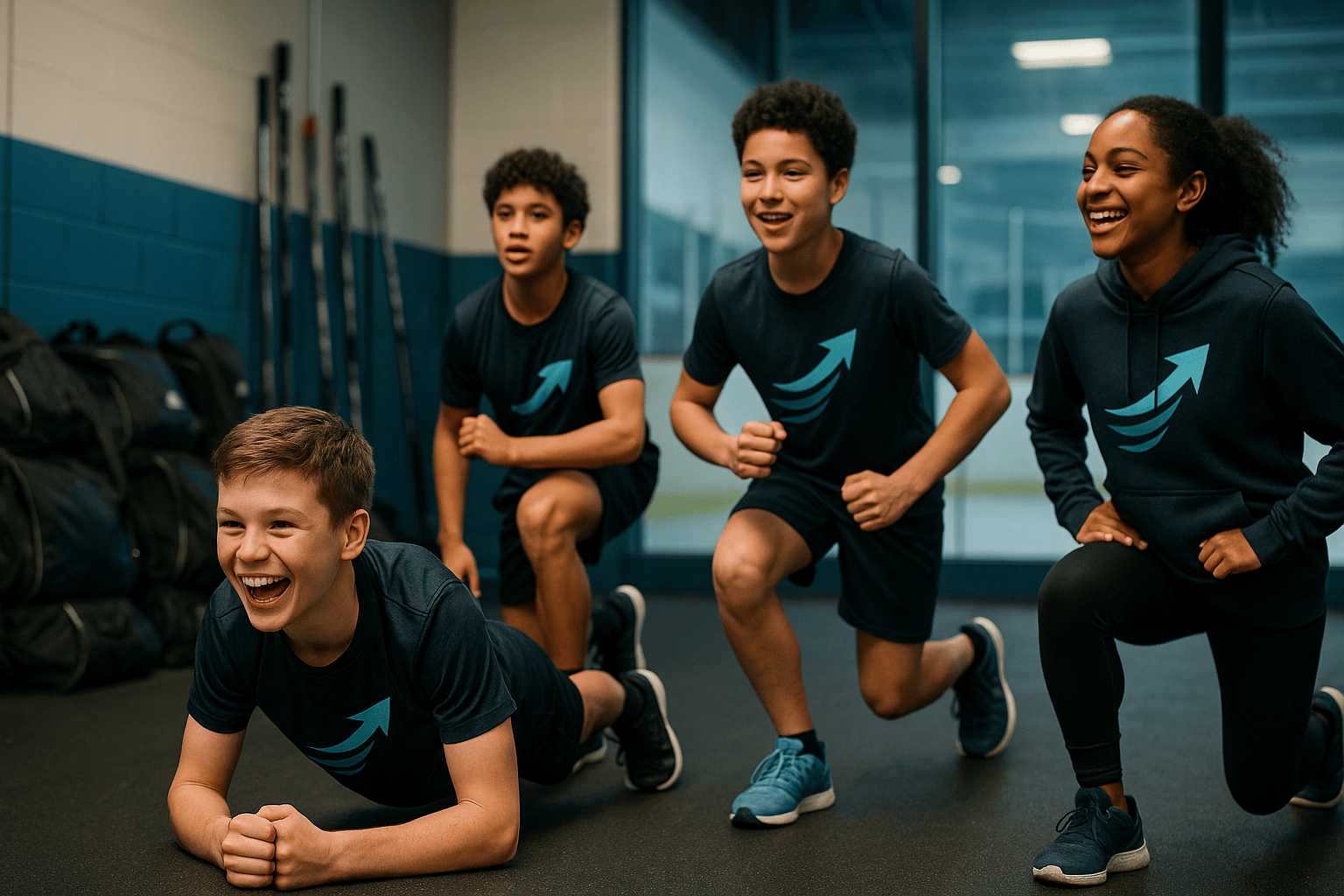
Four teammates doing dryland training together in a rink corridor, laughing
The point of all of it: kids doing the work, together, when nobody is making them.

This is the screen that decides whether a 12-year-old trains on a Tuesday in February. Today's workout is one tap away, their streak is the first thing they see, and their teammates' work is right beside it.
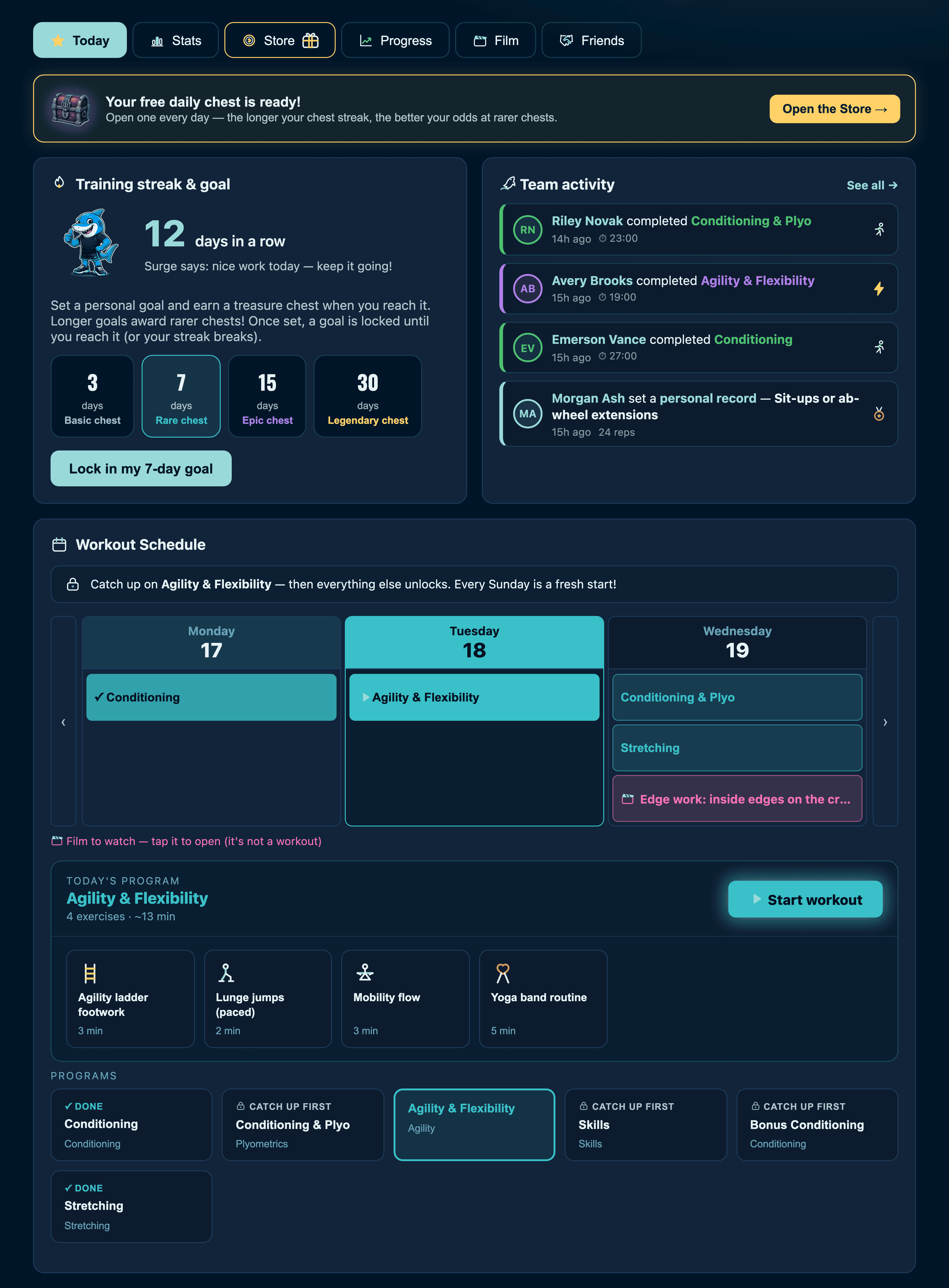
A player's dashboard with a 12-day streak, team activity, the weekly schedule and today's program
Scroll inside the frame · A 12-day streak, a chest waiting to be opened, what the rest of the team did today, this week's plan, and today's six exercises with a Start button.

Competition that rewards showing up

The boards are built so the hardest-working kid wins, not the most athletic one. Points come from turning up and putting the minutes in — not from how fast you are or how much you lift.
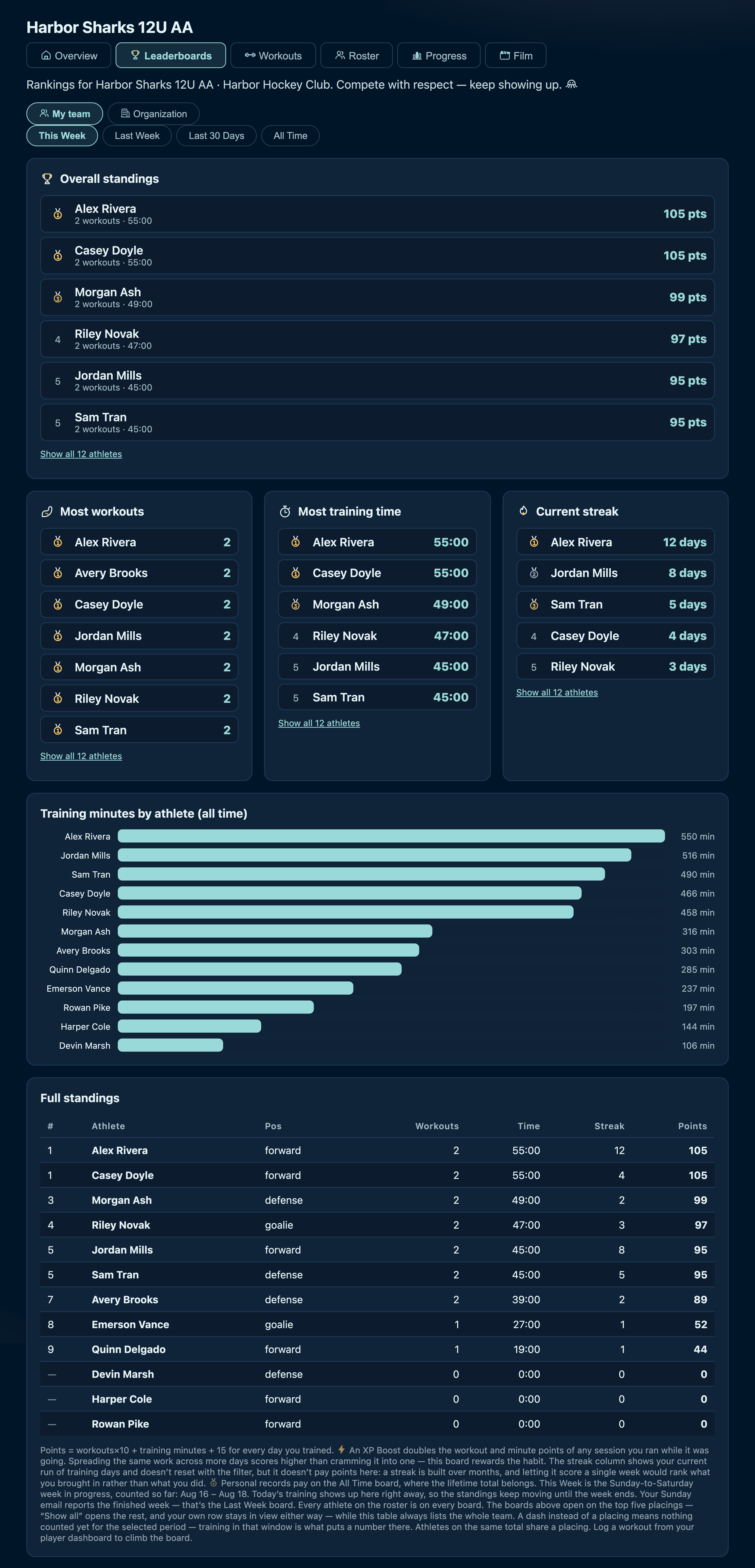
The team leaderboard with overall standings, most workouts, most training time and current streak
Scroll inside the frame · Four ways to lead, so more than one kid is winning something: overall points, most workouts, most training time, and the longest current streak. Every athlete on the roster appears on every board.

Points = 10 per workout + 1 per minute trained + a bonus for each day you train. Spreading the same work across more days scores higher than cramming it into one — the board rewards the habit. Boards run by the week (Sunday to Saturday), the month, or all time, so a kid who joins in January isn't staring at a leader six months ahead of them.

Nobody is stuck at the bottom of the list
A board opens on the top five, but your own row is always pinned in view at its real placing. Athletes on the same total share a place rather than being split by a tiebreaker nobody can see.

Treasure, records and badges

Doubloons & chests
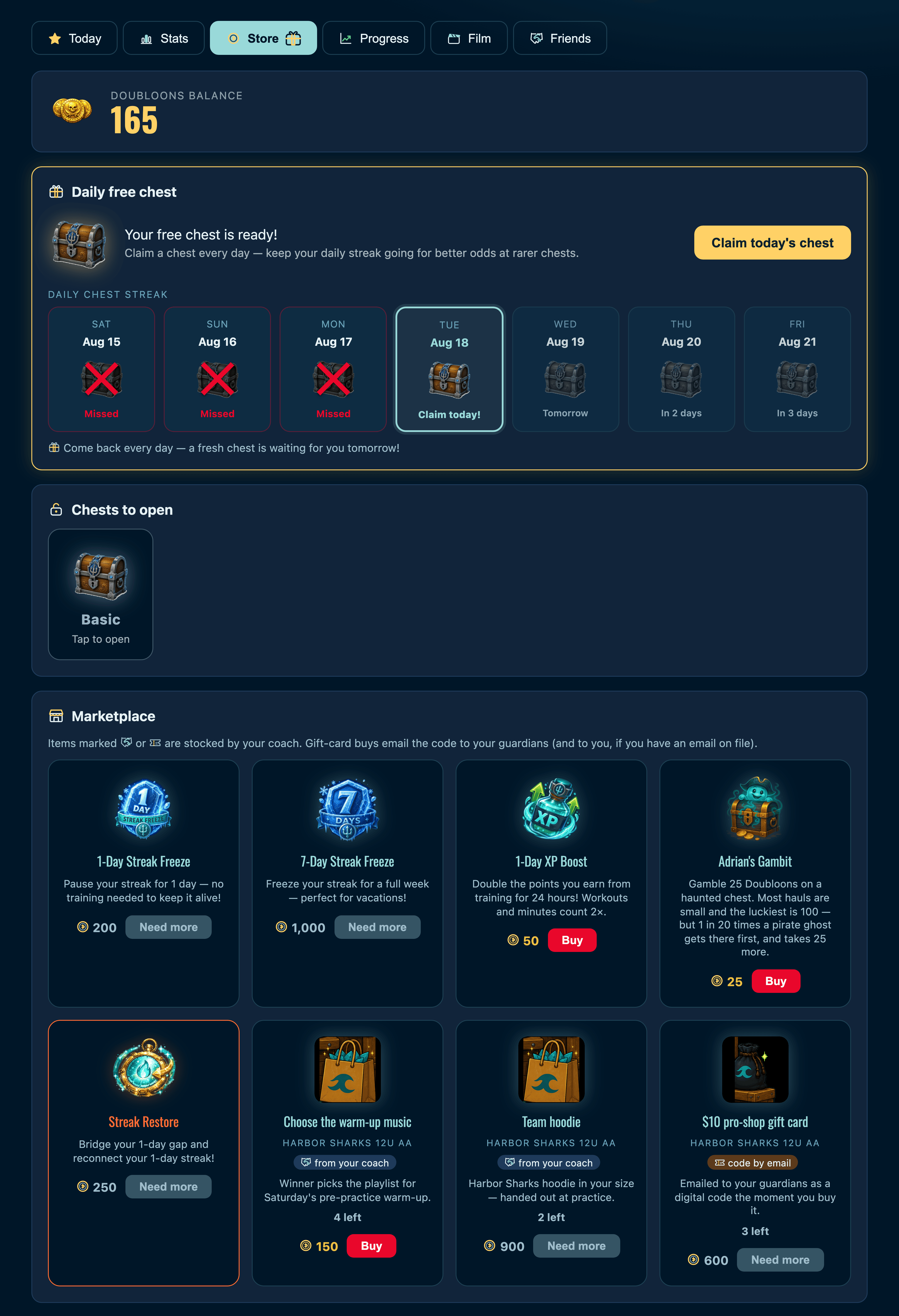
Training earns treasure chests; chests pay out Doubloons. There's a free one every day they train, and the streak makes rarer ones more likely.
Personal records
Beat your own best at anything and it's announced to the team feed — competing against yourself counts as competing.
Insignia
Badges for the milestones that aren't leaderboard-shaped: first workout, a month straight, a hundred sessions.
The player's store with a Doubloons balance, chests and the marketplace
Scroll inside the frame · Where the treasure goes: chests to open, a marketplace of in-app perks, and whatever you stocked in the team shop. Spending is the reason earning matters.

The team sees each other train

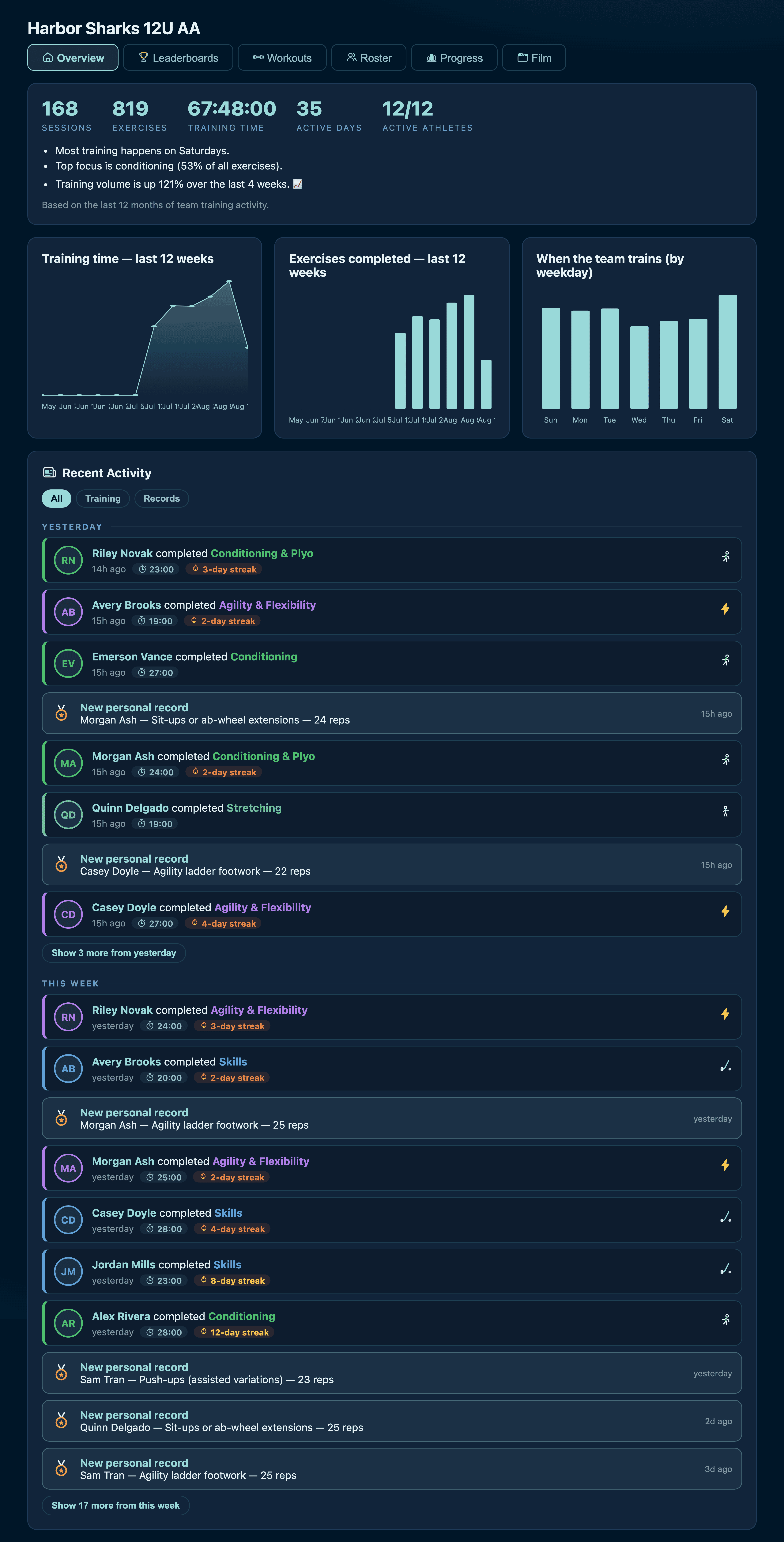
The team page with training totals and a live activity feed of workouts and records
Scroll inside the frame · A live feed of the team's work — who trained, what they did, what record just fell. This is the quiet engine: a kid who sees four teammates train today is a kid who trains today.

There is also a season-long team game — two rival crews, ranks to climb — that you can leave switched off entirely. If you want the detail, it is written up in Pirates vs the Royal Navy.

Want to try it with your own team?

The quickest way to judge it is to run one week with a handful of players. Get in touch and we'll set your team up — roster, your programs, your weekly plan.

Get my team set up← Back to the tour